Incentiv
Building a goal accountability product from 0→1.
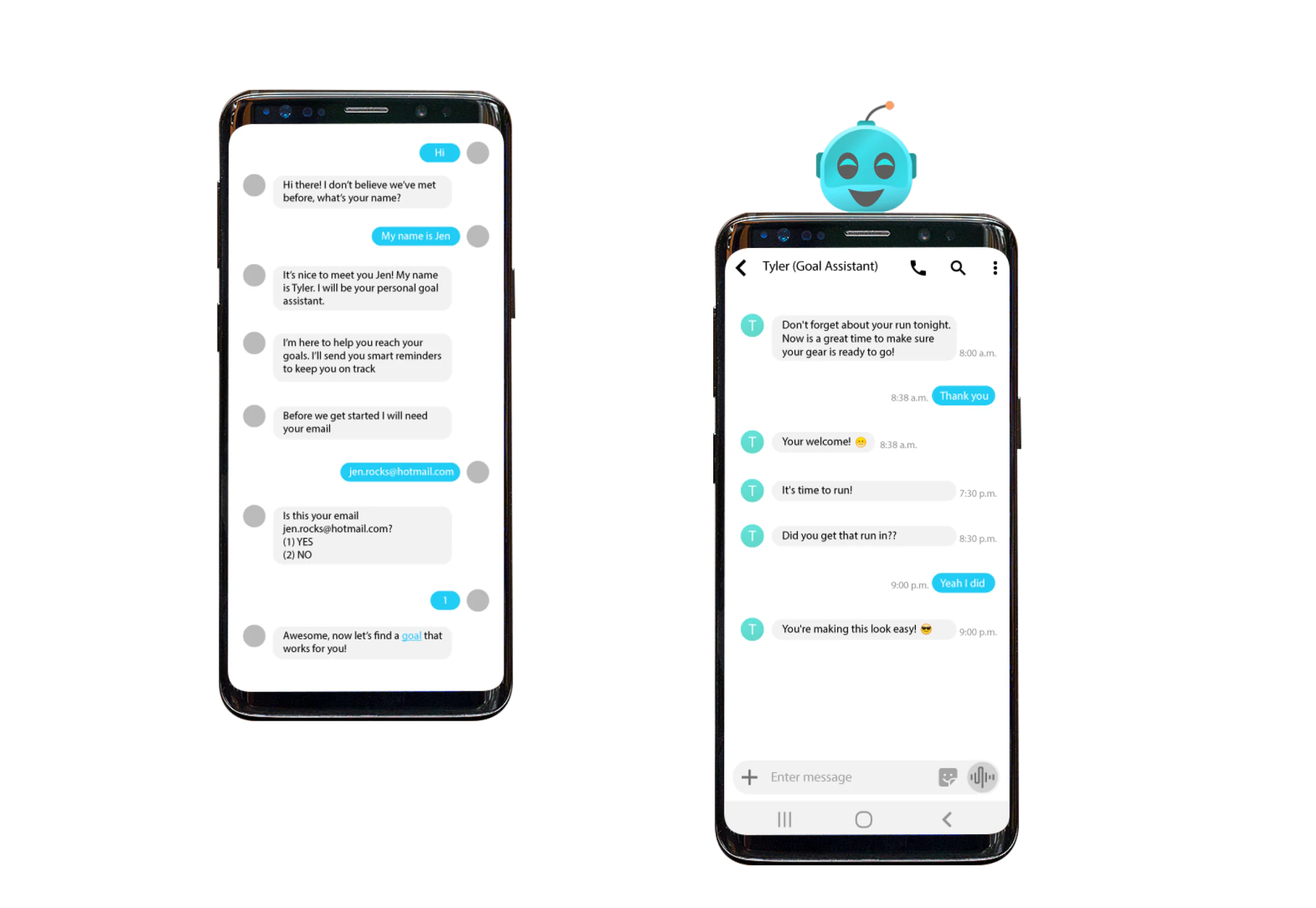
Incentiv was a goal accountability app designed to help people turn intentions into consistent habits through personalized reminders, flexible scheduling, and an empathetic chatbot.
The opportunity
Setting a goal is easy. Following through is harder. People often start with good intentions but struggle to turn them into consistent behavior — motivation changes, routines get disrupted, and traditional reminders quickly become easy to ignore.
We wanted to explore whether a product could provide more ongoing support than simply asking someone to set a goal and check it off.

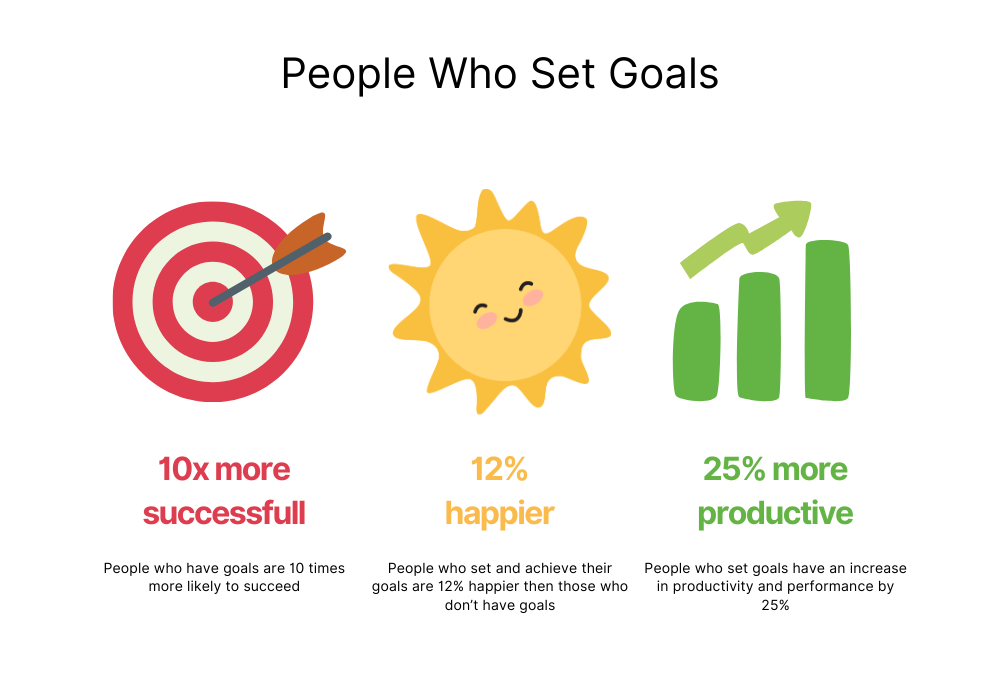
Research on goal setting made the case clearly. Having goals pays off — people who set them are more successful, happier, and more productive.
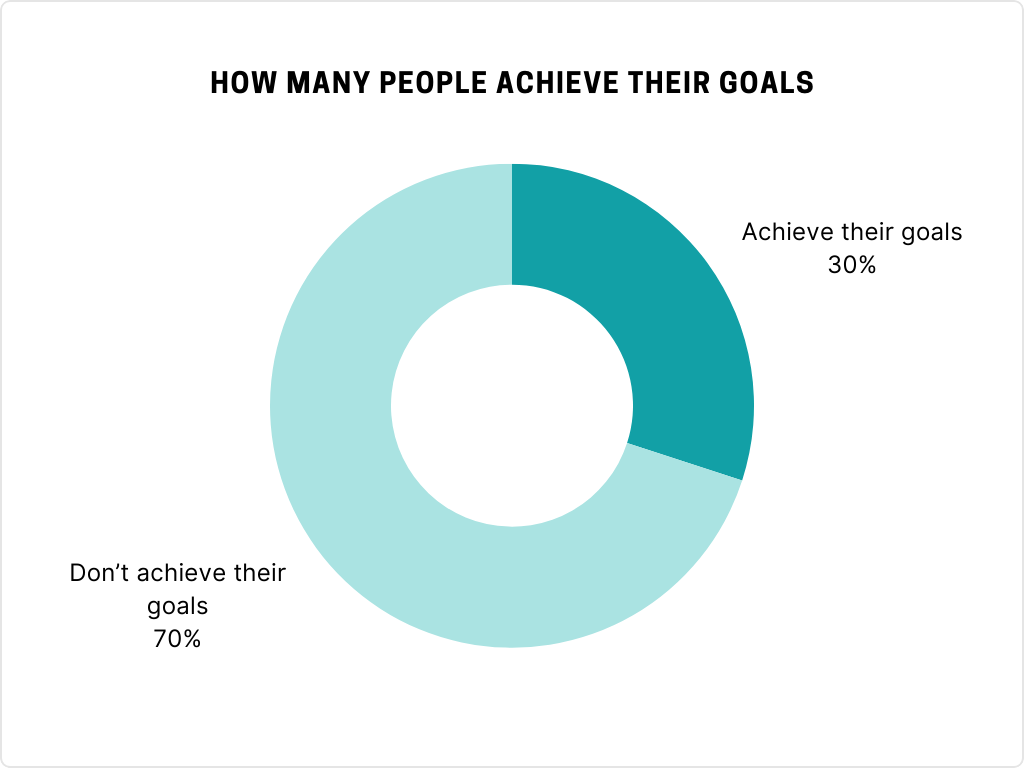
But setting a goal isn't the same as reaching it. Only around 30% of people actually achieve the goals they set — the other 70% fall off somewhere between intention and habit.
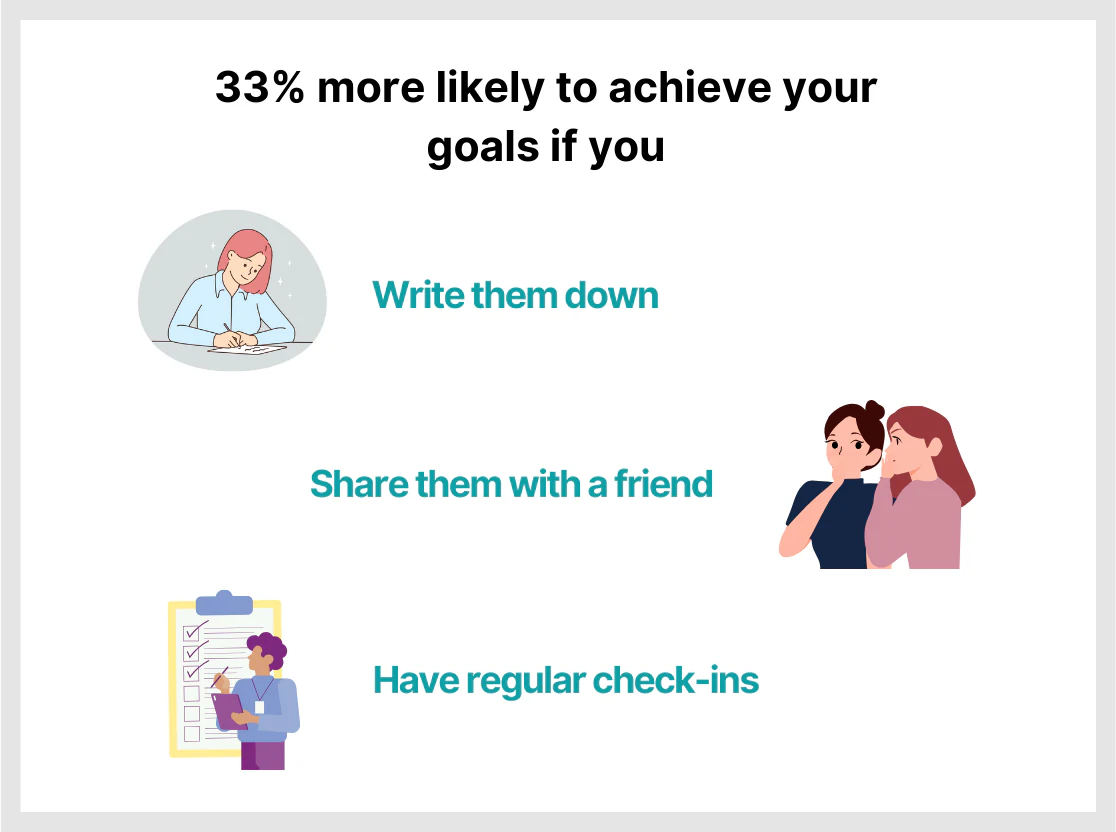
The research also pointed to what closes that gap. People are 33% more likely to achieve their goals when they write them down, share them with someone, and have regular check-ins — in other words, when someone is holding them accountable. That became the thread we pulled on.
"How might we help people follow through on their goals?"
The opportunity was to make accountability feel less like another productivity system and more like having someone in your corner.
Validating the idea before building it
Before investing heavily in development, we wanted to know whether people would actually value this type of support. Rather than immediately building the chatbot, we ran a lightweight "man-behind-the-curtain" experiment — manually acting as the chatbot for a small group, sending personalized reminders and checking in at appropriate times.

After two weeks, participants reported positive experiences. We then introduced a monthly fee to test whether the value extended beyond curiosity. Almost everyone agreed to pay.
That early signal — people were willing to pay for personalized accountability — gave us the confidence to move into product development.
Understanding the problem
I interviewed people with experience setting personal goals to understand what happened between deciding to change and actually following through.
- How people currently set and plan goals
- Where they struggle to follow through
- The role of motivation, routines, and accountability
- What kind of support would actually feel useful
"Can you walk me through your process of setting and planning a goal?"
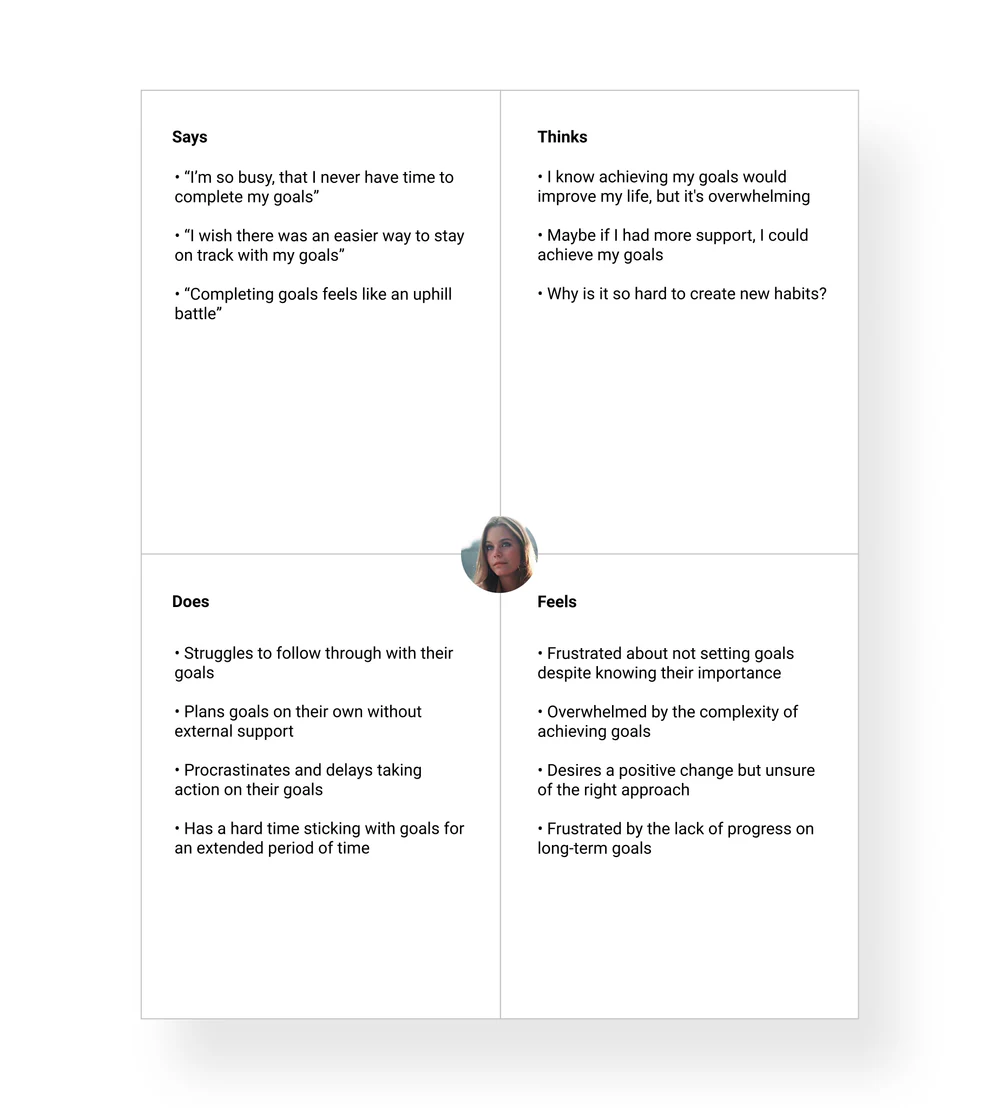
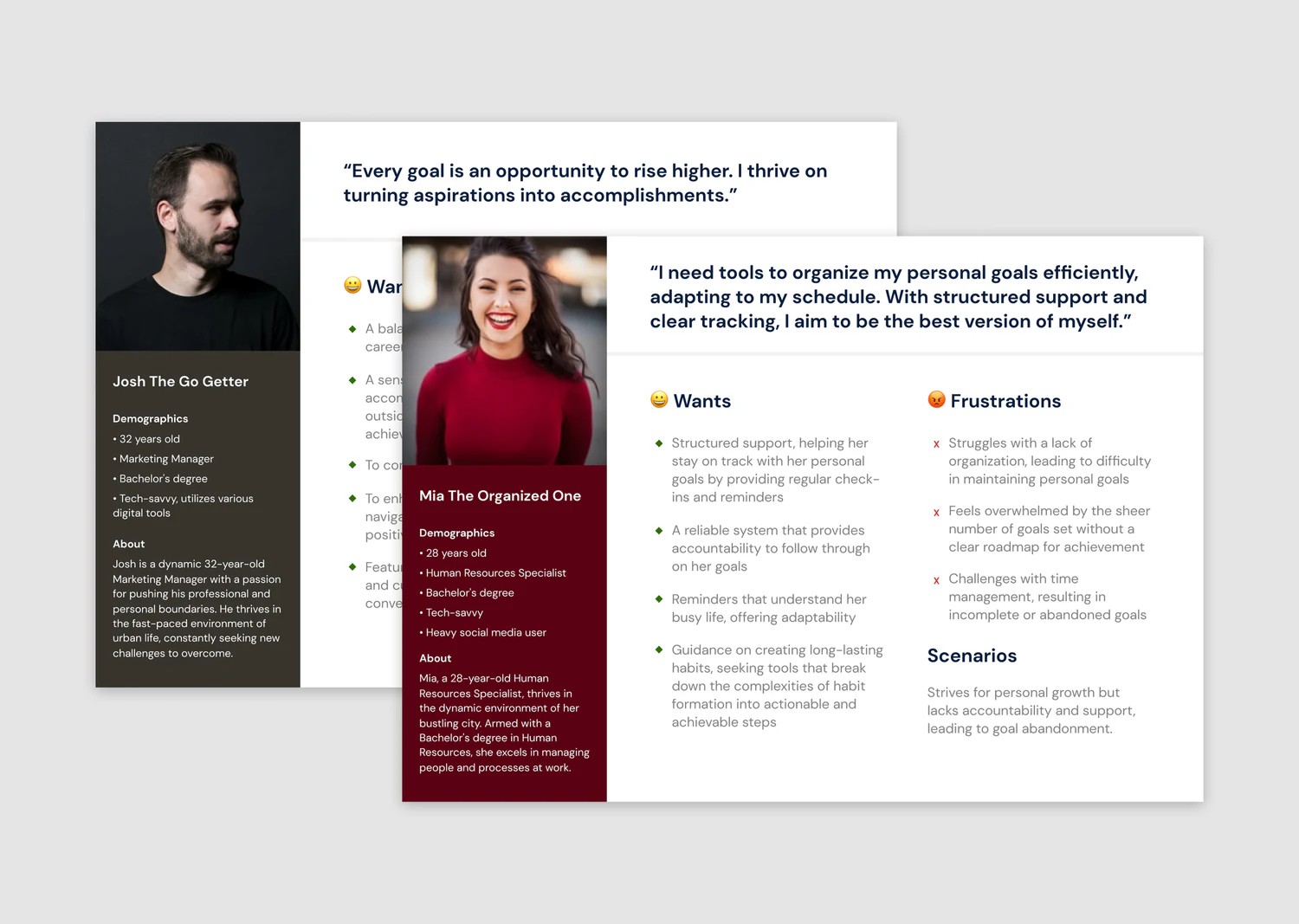
I synthesized the research into an empathy map and personas to give the team a shared understanding of who we were designing for.
The core problem
The research pointed to something broader than remembering to complete a task. People needed help with the ongoing process of turning an intention into a routine.
"People need ongoing, flexible support to follow through with their goals because traditional goal-setting tools often stop at helping users define what they want to accomplish."
Learning from existing products
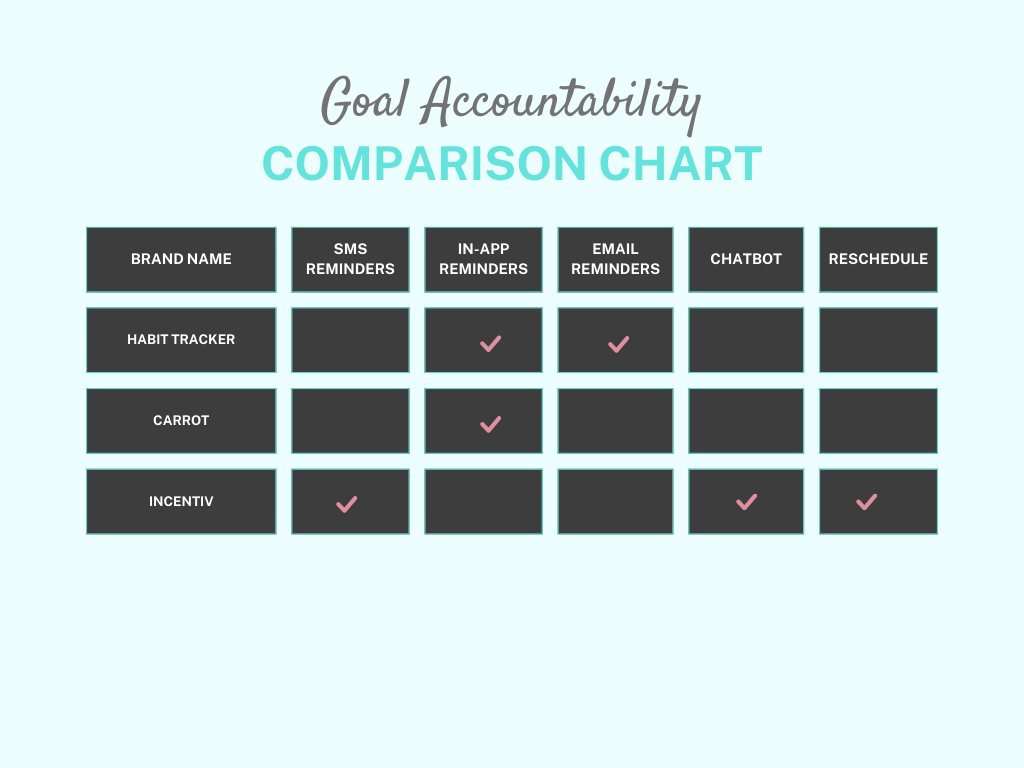
I analyzed existing goal-setting and habit products to understand how they approached accountability. A recurring gap was flexibility: most treated reminders as simple notifications and assumed goals followed a fixed schedule.
These principles became the foundation for the MVP:
- Reminders should feel personal rather than automated
- Timing should reflect the user's goal and schedule
- Users should be able to adjust goals when life gets in the way
- The experience should feel supportive rather than punitive
Designing the MVP
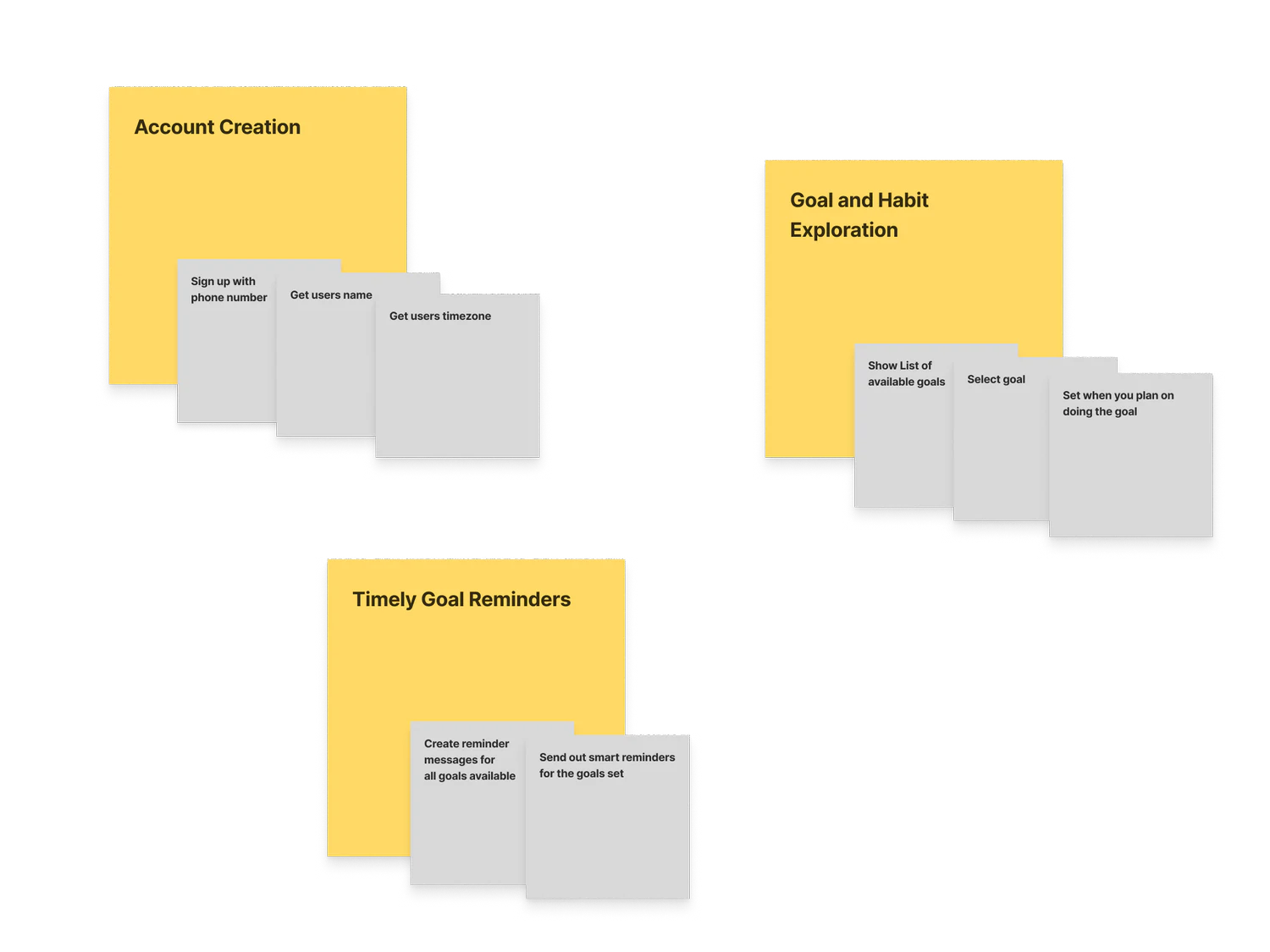
The goal wasn't to build every possible feature. We needed to test the core value proposition first: would personalized accountability help people follow through?
Designing the chatbot
The chatbot was one of the most important parts of the product. It wasn't about automating messages — it needed to feel like a supportive accountability partner, responding to different situations with a consistent tone.
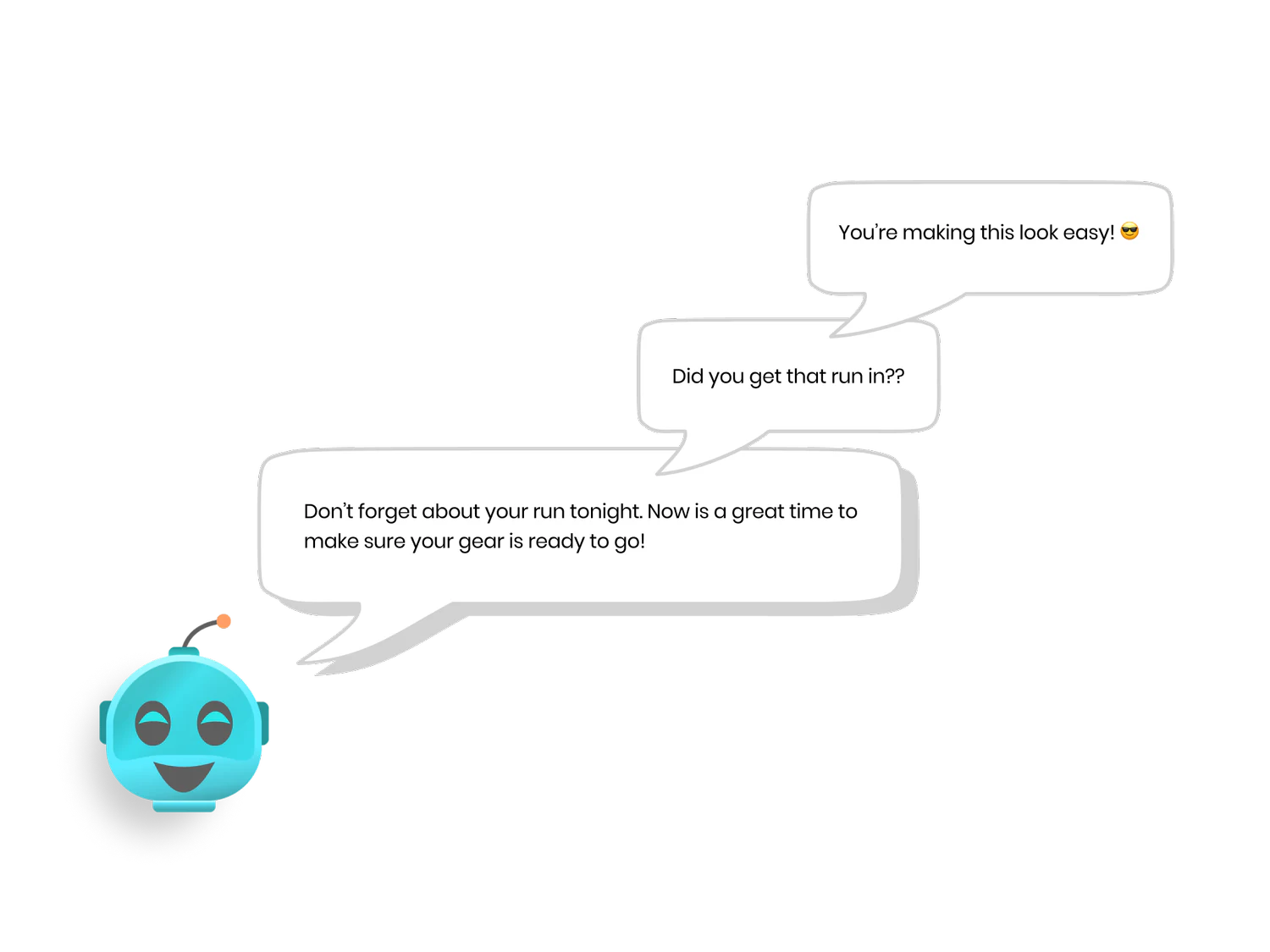
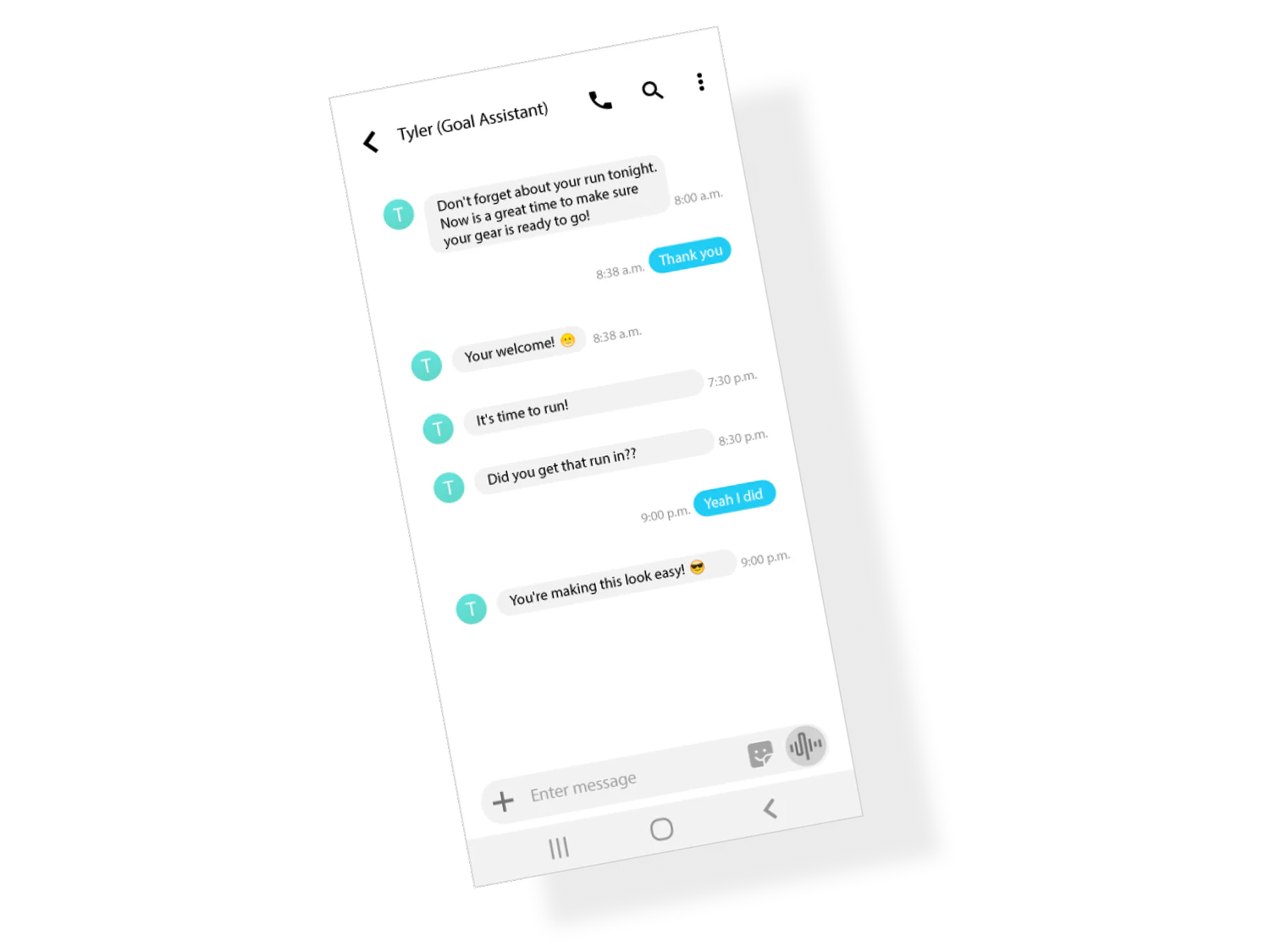
- Personalized reminders — timing accounted for the type and difficulty of a goal. A morning workout might get a reminder the night before, giving time to prepare.
- Timezone awareness — users set morning, afternoon, or evening schedules so SMS arrived when they were likely available.
- More natural conversations — a pool of possible responses avoided repetitive, robotic messages.
- Graceful fallbacks — designed behavior for unrecognized inputs so the conversation recovered instead of breaking.
Designing for real life
One of the most important product decisions was letting users adjust their goals. Instead of treating a missed goal as a failure, Incentiv let users reschedule it.
That distinction was central to an accountability experience that felt supportive rather than punitive.
From sketches to interface
I started with pencil-and-paper sketches before moving into Figma. Working quickly at low fidelity let me explore layouts and interaction patterns without getting distracted by polish — and helped me think through the chatbot as a whole experience rather than a collection of screens.

Branding and visual identity
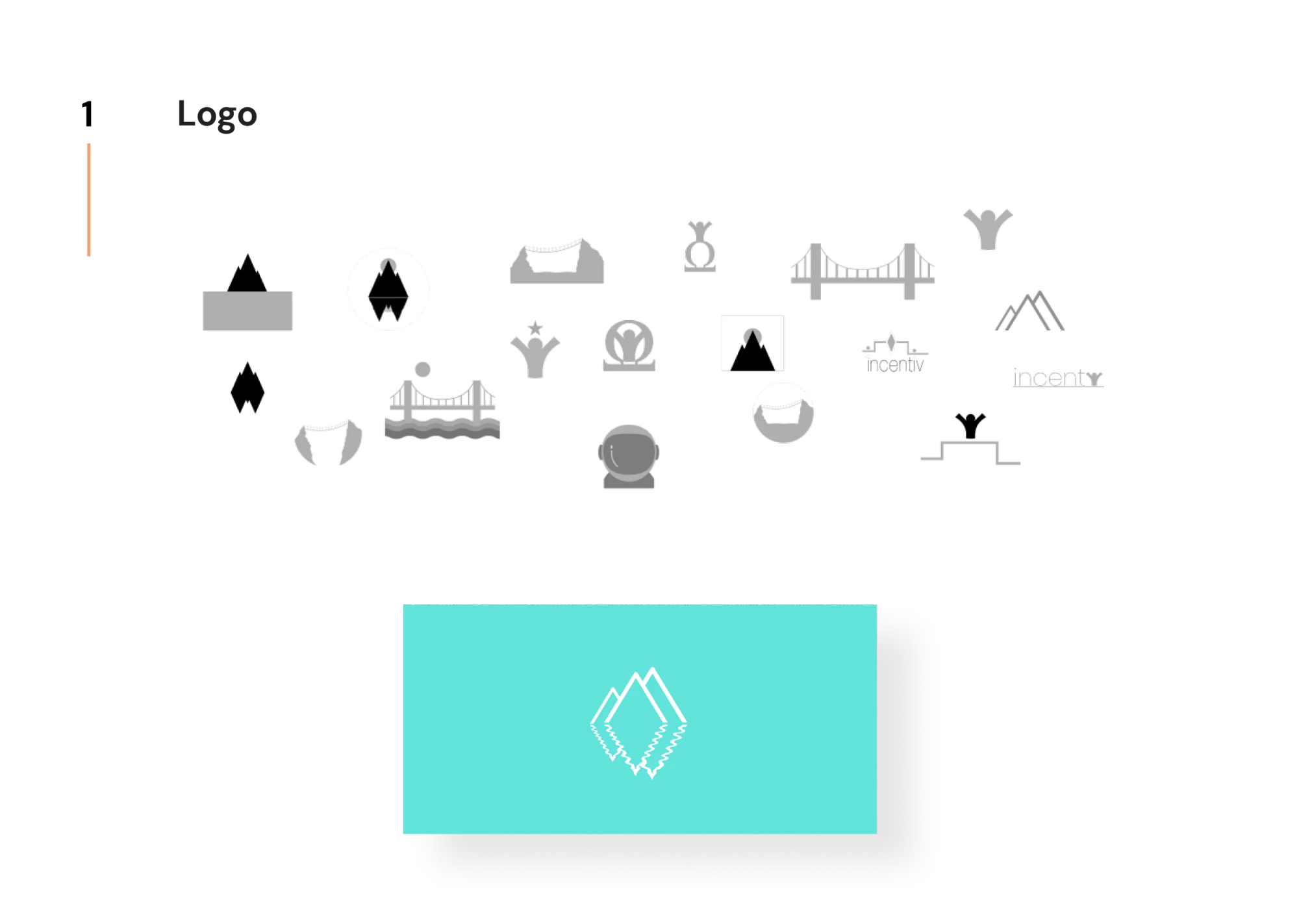
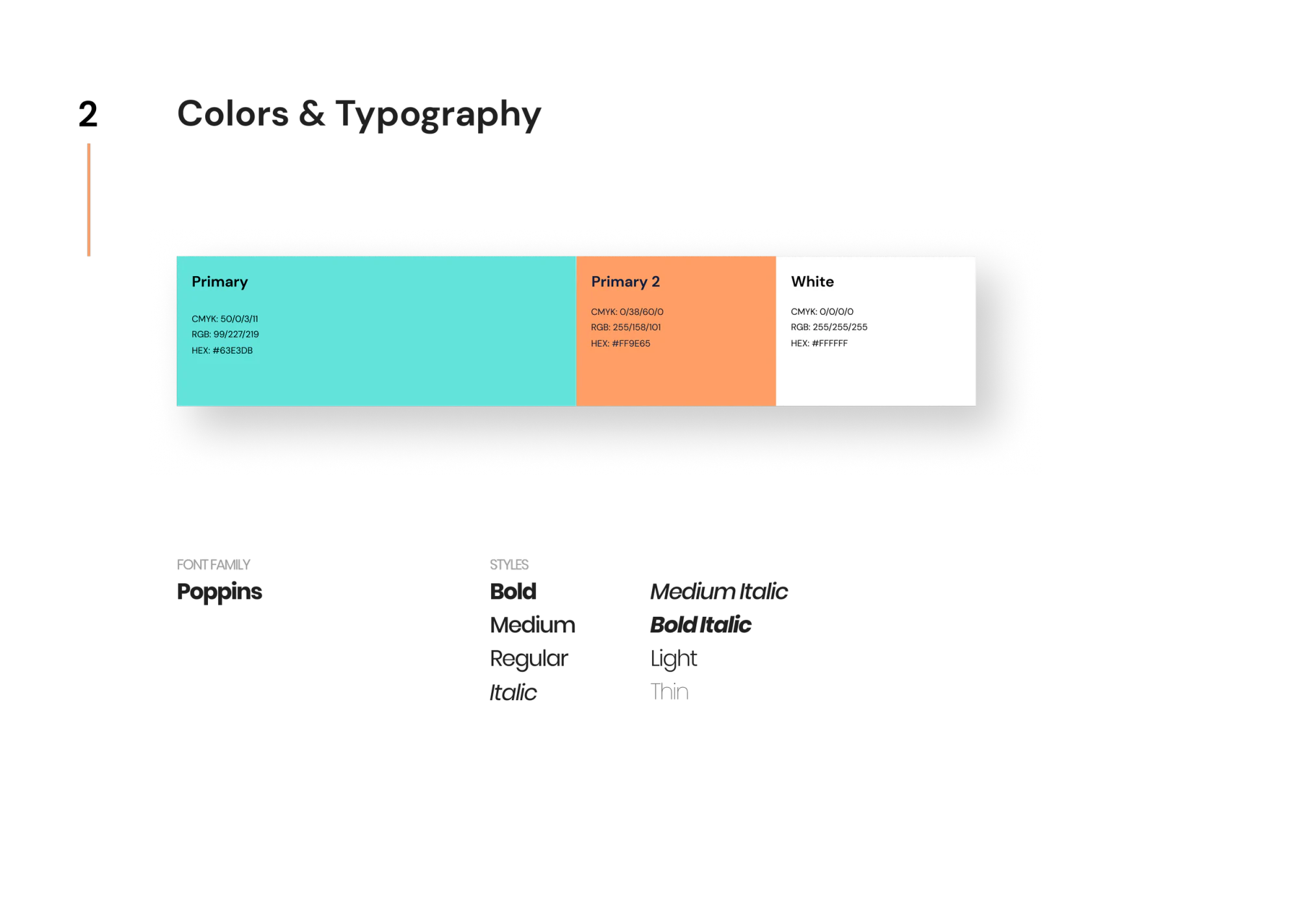
As a new product, Incentiv needed a visual identity that established its personality from the start: approachable, encouraging, and human. I designed the logo, color palette, typography, icons, components, and interface patterns — with accessibility in mind — and translated them into a reusable design system so the product could stay consistent as it evolved.

Testing the experience
I built interactive prototypes and a live version of the chatbot to test in a realistic environment, then ran guerrilla usability tests with friends and family to catch issues that weren't obvious in static screens.
Testing the real conversation exposed issues that would have been hard to find from screens alone.
Building and launching
I also implemented the product myself, translating the designs and flows into a functional web app in Vue.js. Keeping the technical scope focused on the core experience got the product into users' hands quickly, and working across design and code meant I could iterate and validate interactions without waiting on a full development cycle.
Results
The MVP moved Incentiv from an early concept to a functional product with paying beta users.
- A web app for discovering and setting goals
- Personalized goal reminders delivered through SMS
- A conversational chatbot designed around accountability
- Flexible scheduling and rescheduling
- A branded product and reusable design system
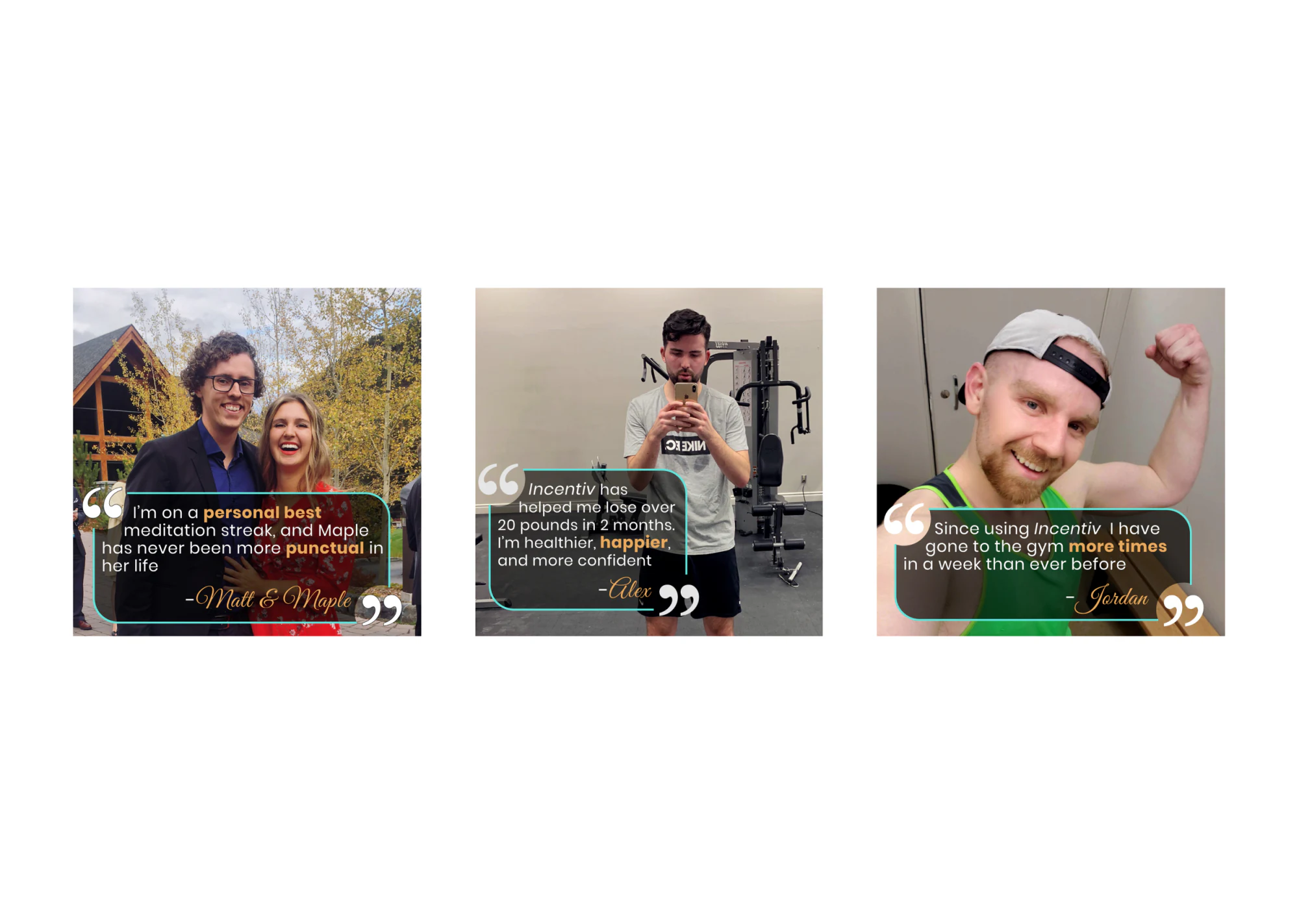
- An actively paying beta group with positive early feedback
What I learned
- Validate the riskiest assumption first. The man-behind-the-curtain experiment showed people wanted the experience before we built any technology.
- Designing AI-like experiences means designing for failure. Users said things we hadn't anticipated — fallback and recovery mattered as much as the happy path.
- 0→1 design is about deciding what not to build. Focusing on the core accountability loop let us test the fundamental value proposition earlier.
- Real-world constraints should shape the product. It became more useful when it adapted to changing schedules instead of expecting users to adapt to it.