Book a Test Drive Online
Designing an end-to-end test drive experience for customers and the Curbie team.
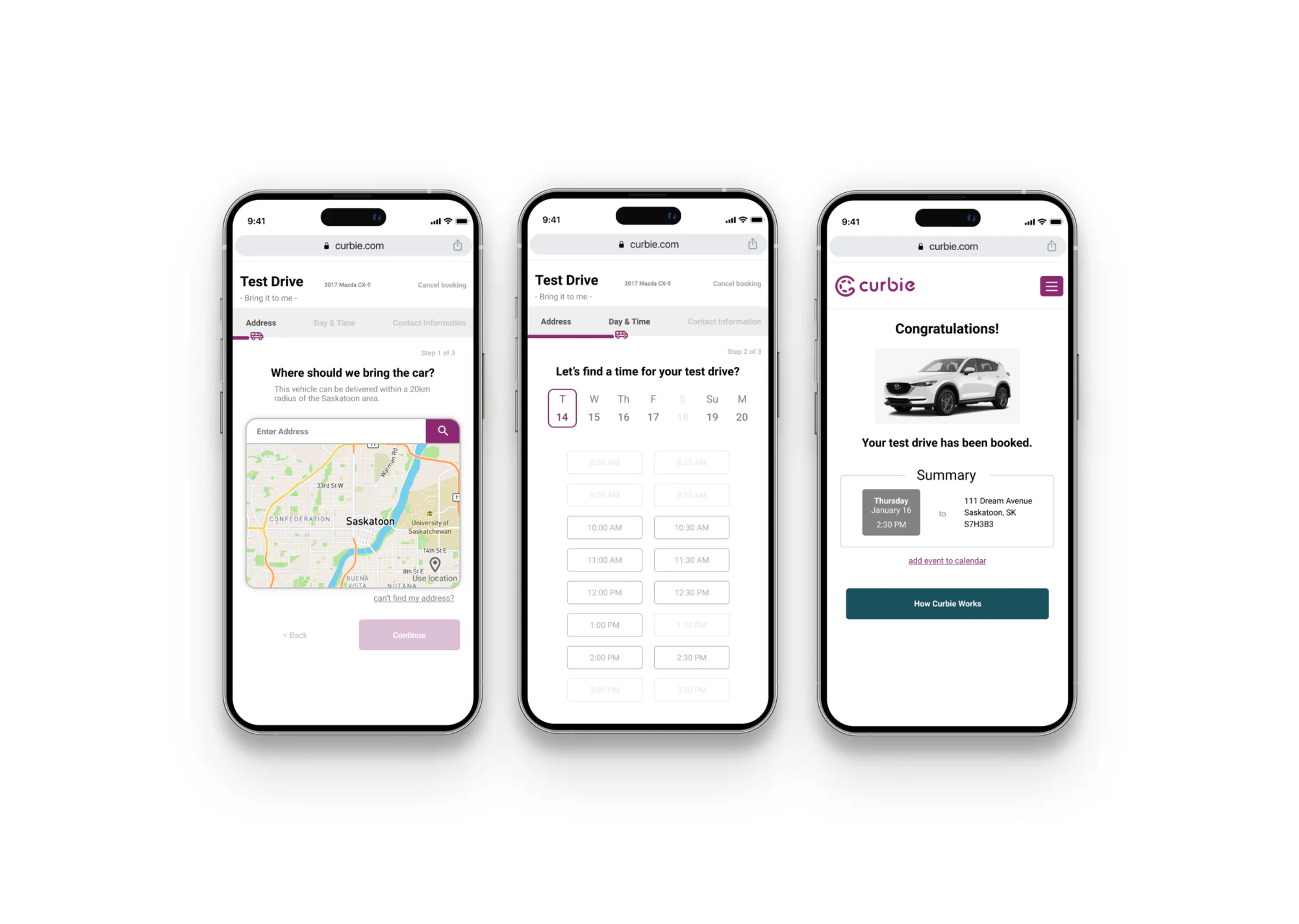
Curbie didn't have a way for customers to schedule test drives online. Interested customers had to call or email support to arrange an appointment, and internally there was no shared calendar for test drives — making it difficult for the team to understand vehicle availability, coordinate appointments, and avoid scheduling conflicts.
I led the end-to-end design of a new online test drive experience — from customer research and journey mapping through prototyping, usability testing, and implementation — giving customers self-service booking and giving the Curbie team a centralized calendar to manage appointments.
The problem
Buying a vehicle is a high-consideration experience — customers often want to see and drive it first. At Curbie, arranging that was entirely manual: a customer would contact support, who then had to coordinate the appointment internally. The team didn't have a reliable view of test drive availability, since each member kept their own calendar.
- Couldn't book directly online
- Had to rely on calls or email
- Scheduling required back-and-forth
- Support spent time manually coordinating
- No easy view of vehicle availability
- Risk of double-booking, no daily overview
"How might we make booking a test drive convenient for customers while giving our team the visibility needed to manage appointments effectively?"
Understanding the customer experience
Before designing the booking experience, I wanted to understand what customers actually experienced at a dealership. I interviewed people who had recently gone through the process or were interested in purchasing — focusing on what motivated a test drive, what created confidence or uncertainty, and what made the process frustrating. The test drive was more than a scheduling problem; it was one step in a much larger vehicle-buying journey.

Mapping the experience
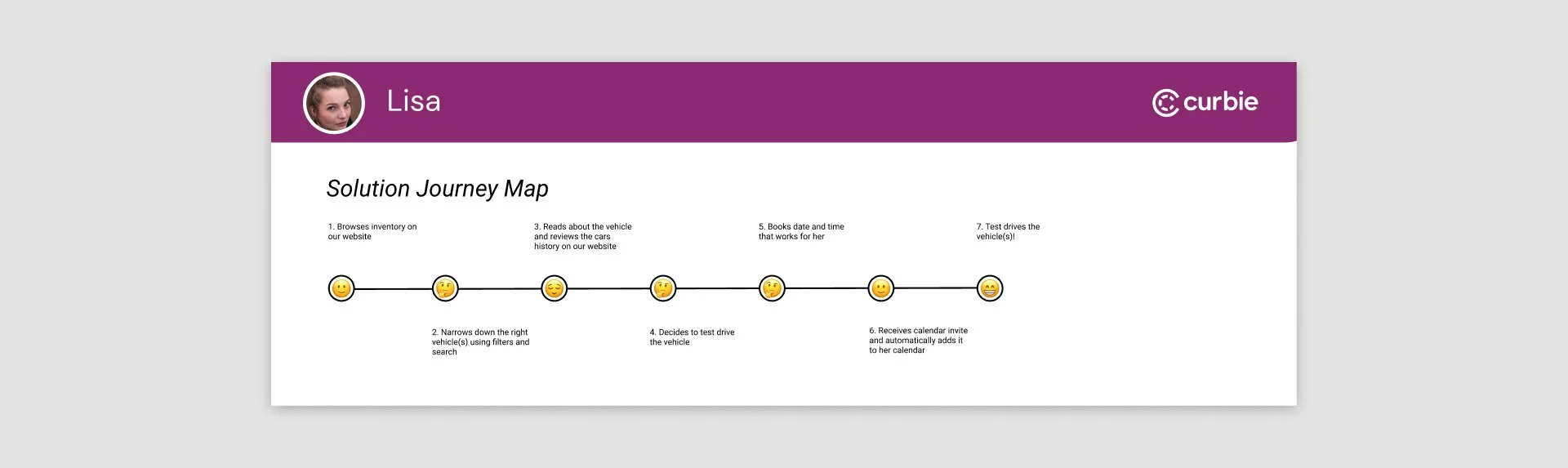
I created a persona and empathy map to help the team understand the customer's goals, concerns, and expectations, then mapped the journey from discovering a vehicle through scheduling and completing the test drive — surfacing opportunities to reduce friction before the customer even arrived.
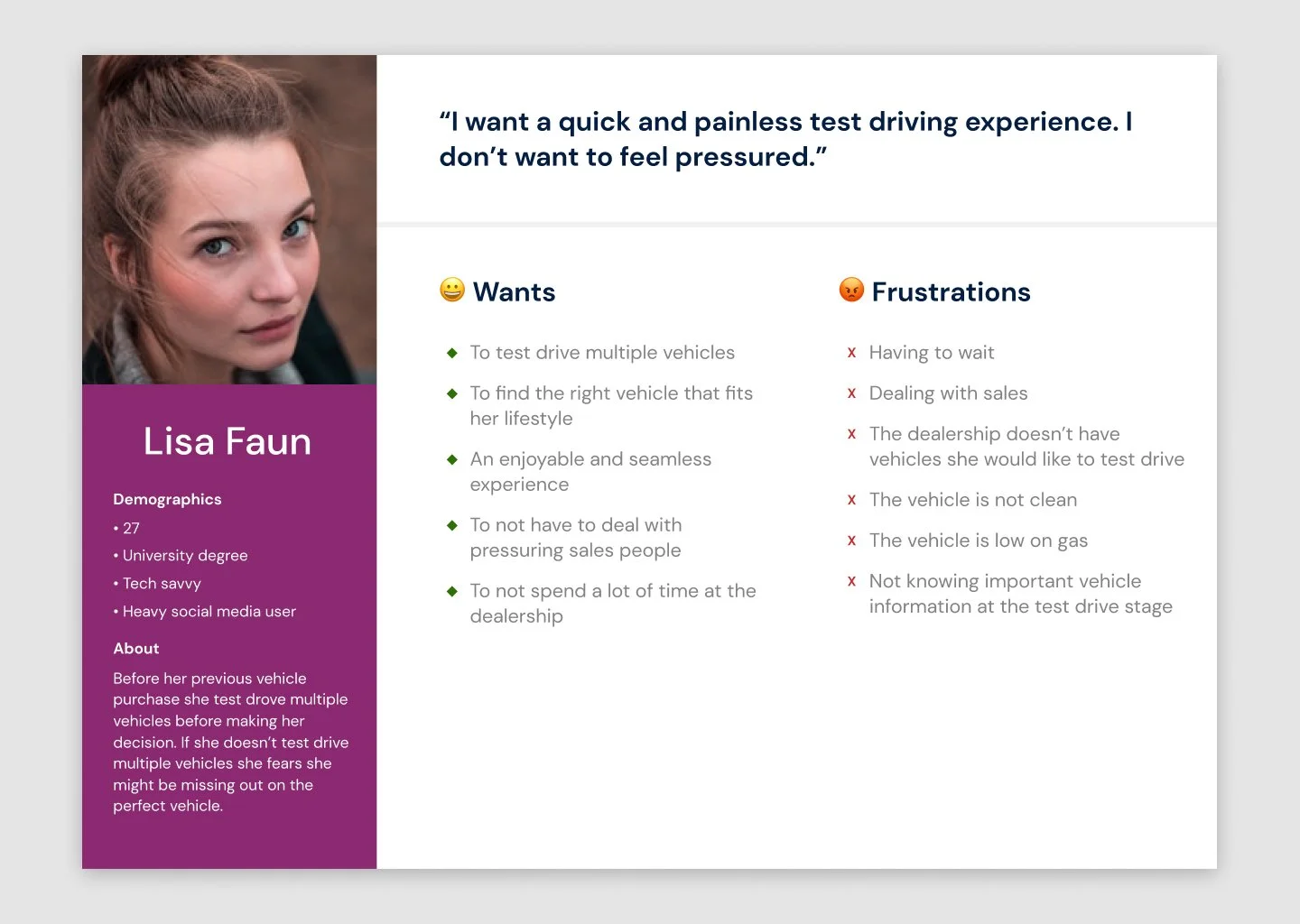
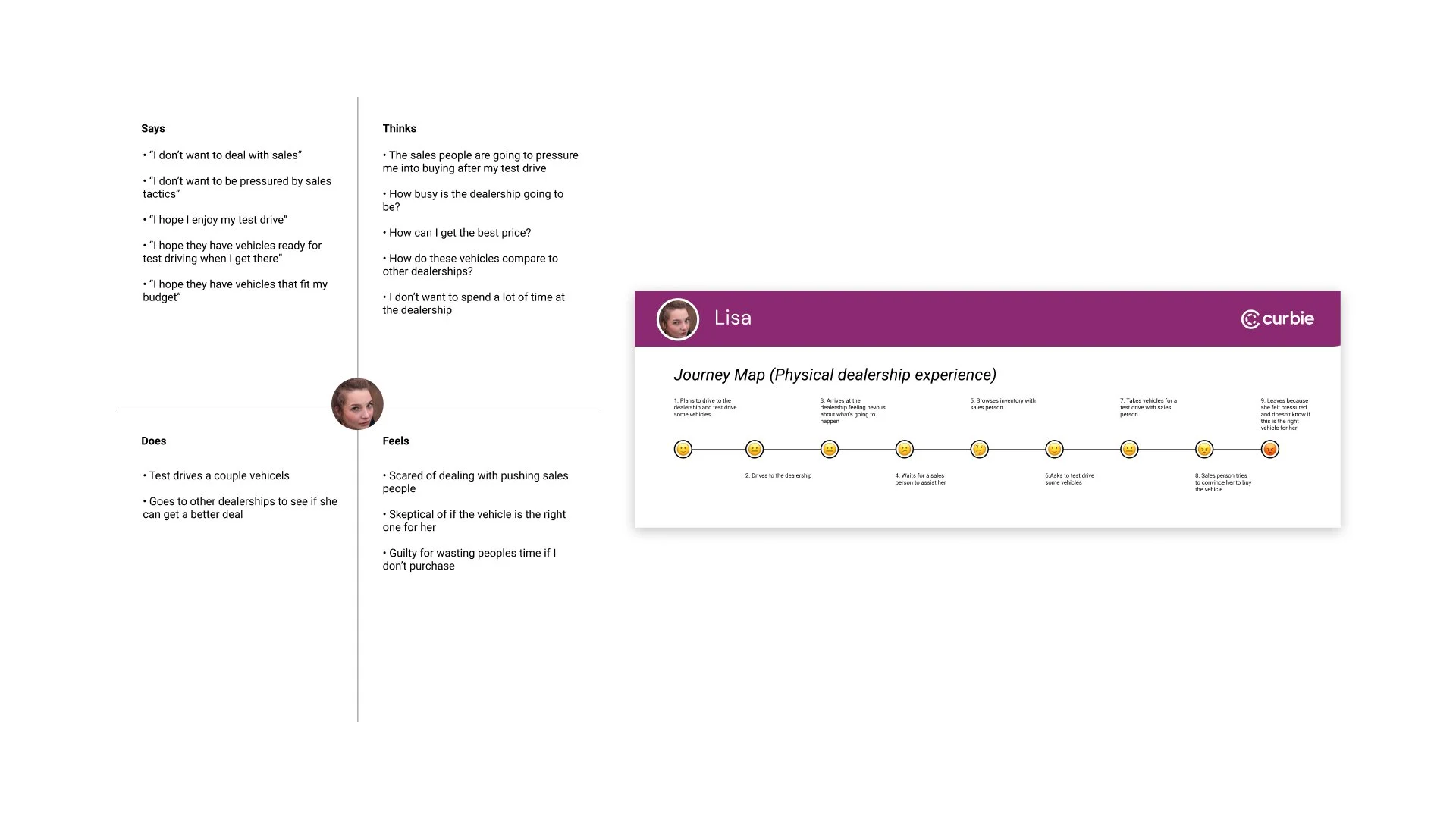
Customers needed to feel confident that:
- The vehicle would be available.
- The appointment would actually be scheduled.
- They knew where the test drive would happen.
- The process would be straightforward.
Understanding the internal workflow
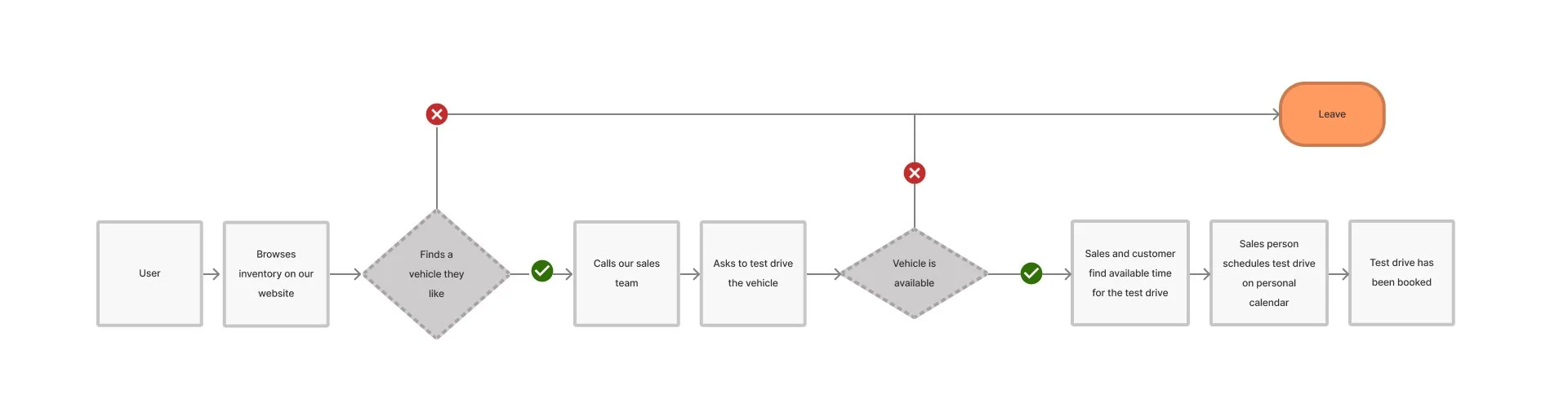
I interviewed the Curbie team to see how test drives were currently scheduled. Because each team member had their own calendar, support couldn't easily answer "when can this vehicle be test-driven?" or "how many test drives are already scheduled?" The booking experience needed to solve an internal coordination problem as much as a customer-facing one.
Looking beyond the obvious solution
A competitive analysis of other automotive marketplaces and booking experiences surfaced a feature from a competitor: delivery test drives, where a vehicle is brought to the customer instead of visiting a dealership. It was getting positive feedback, so I brought the opportunity to stakeholders, and the team wanted to explore it.
This changed the scope from "book a test drive at Curbie" to "choose how you want to experience the vehicle."
Designing the new experience
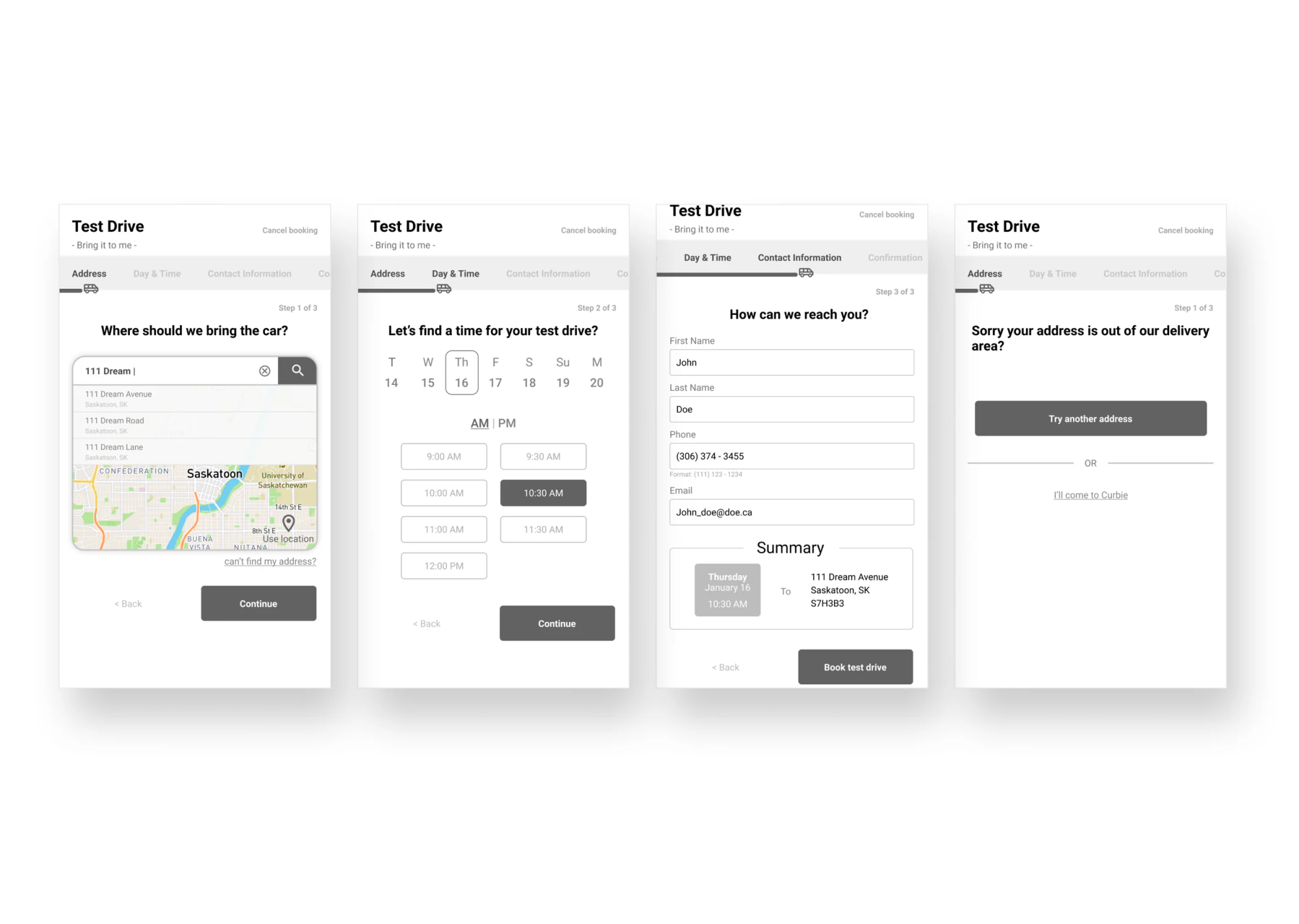
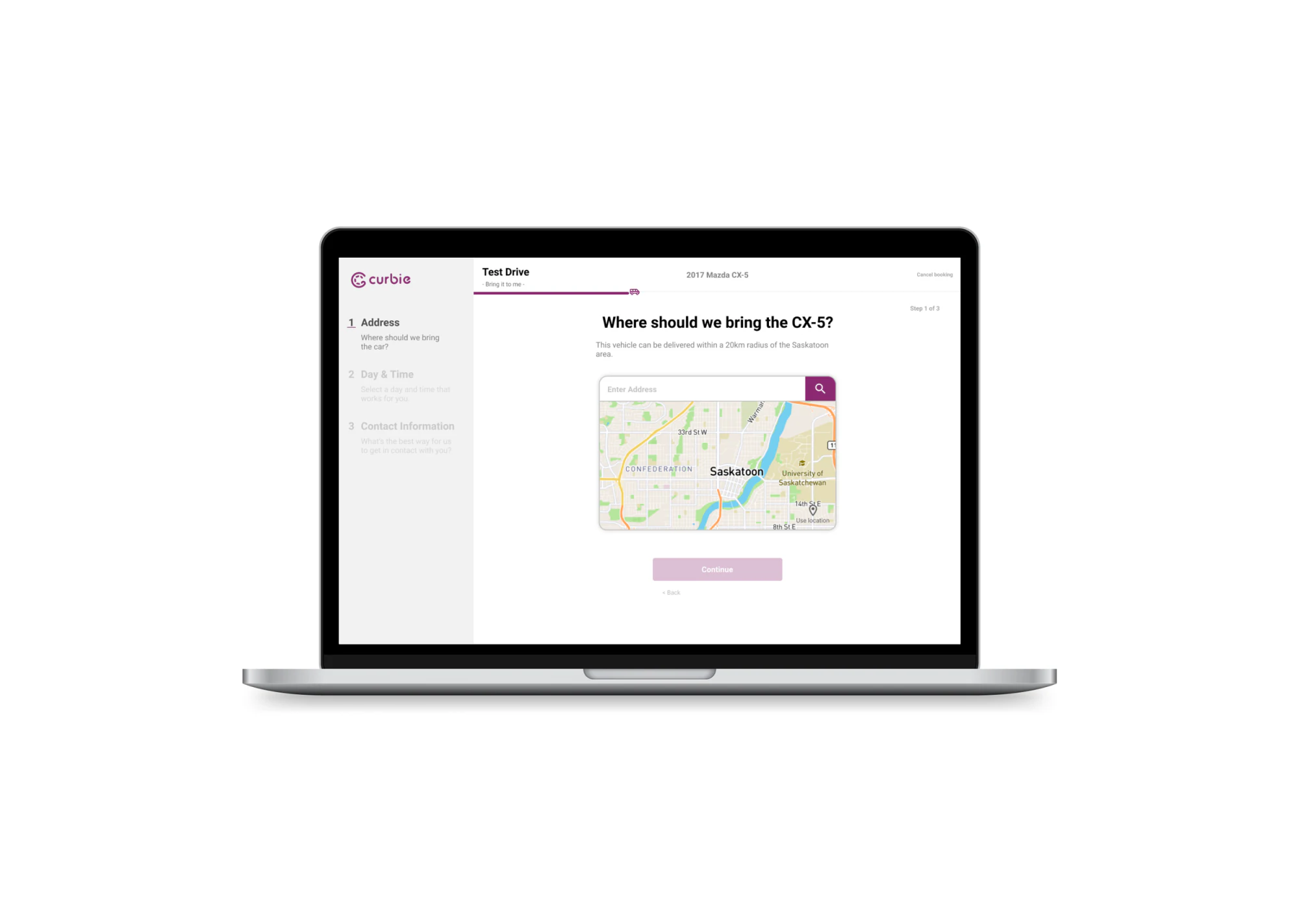
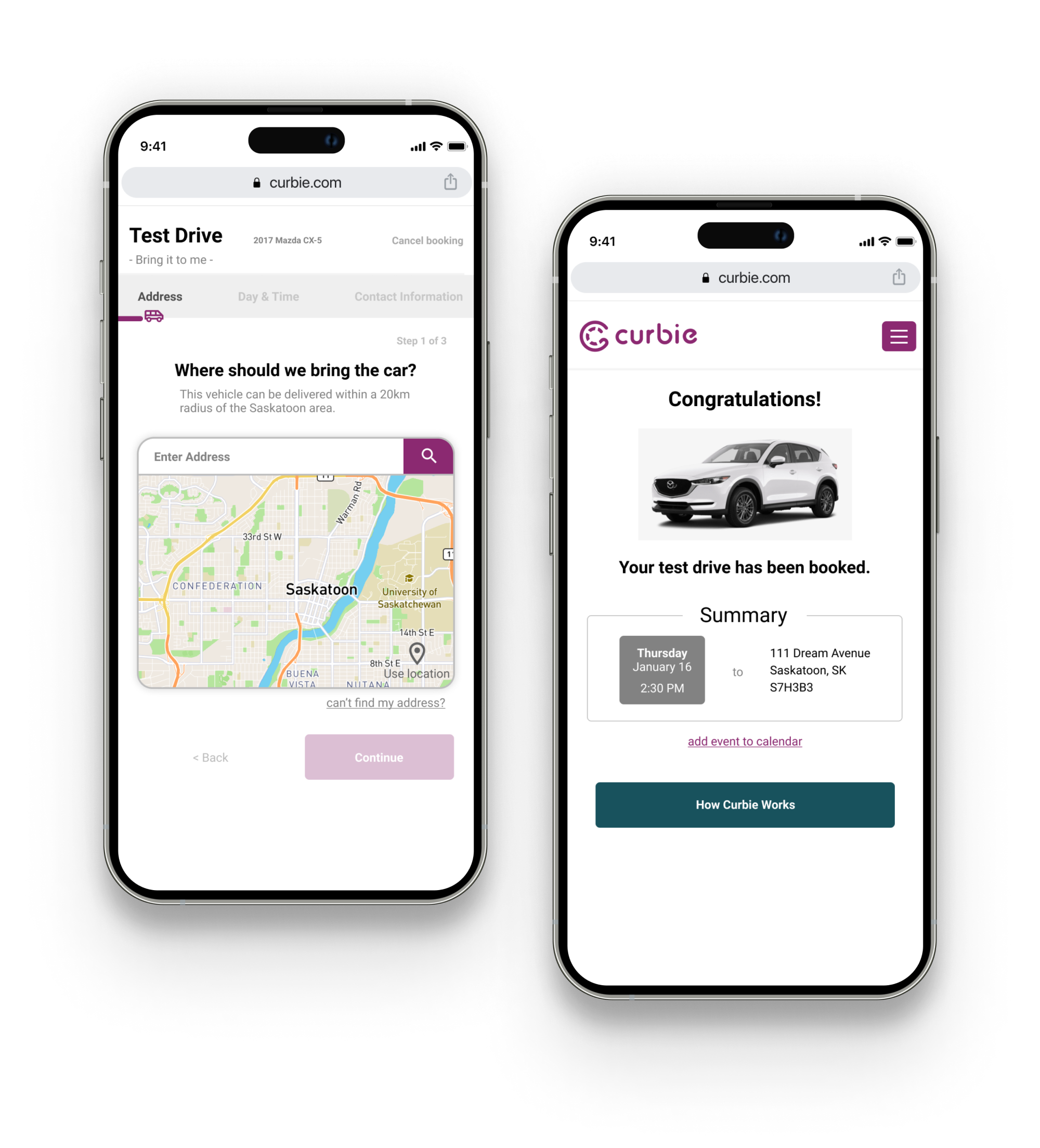
The new concept needed to support two options: visit Curbie, where the customer picks a time to test-drive at Curbie's location, and delivery test drive, where the vehicle comes to them. Supporting delivery introduced a new requirement — location — so I explored Google's mapping capabilities, letting customers see their address on a map and adjust the pin, or use their current location with permission.
From concept to flow
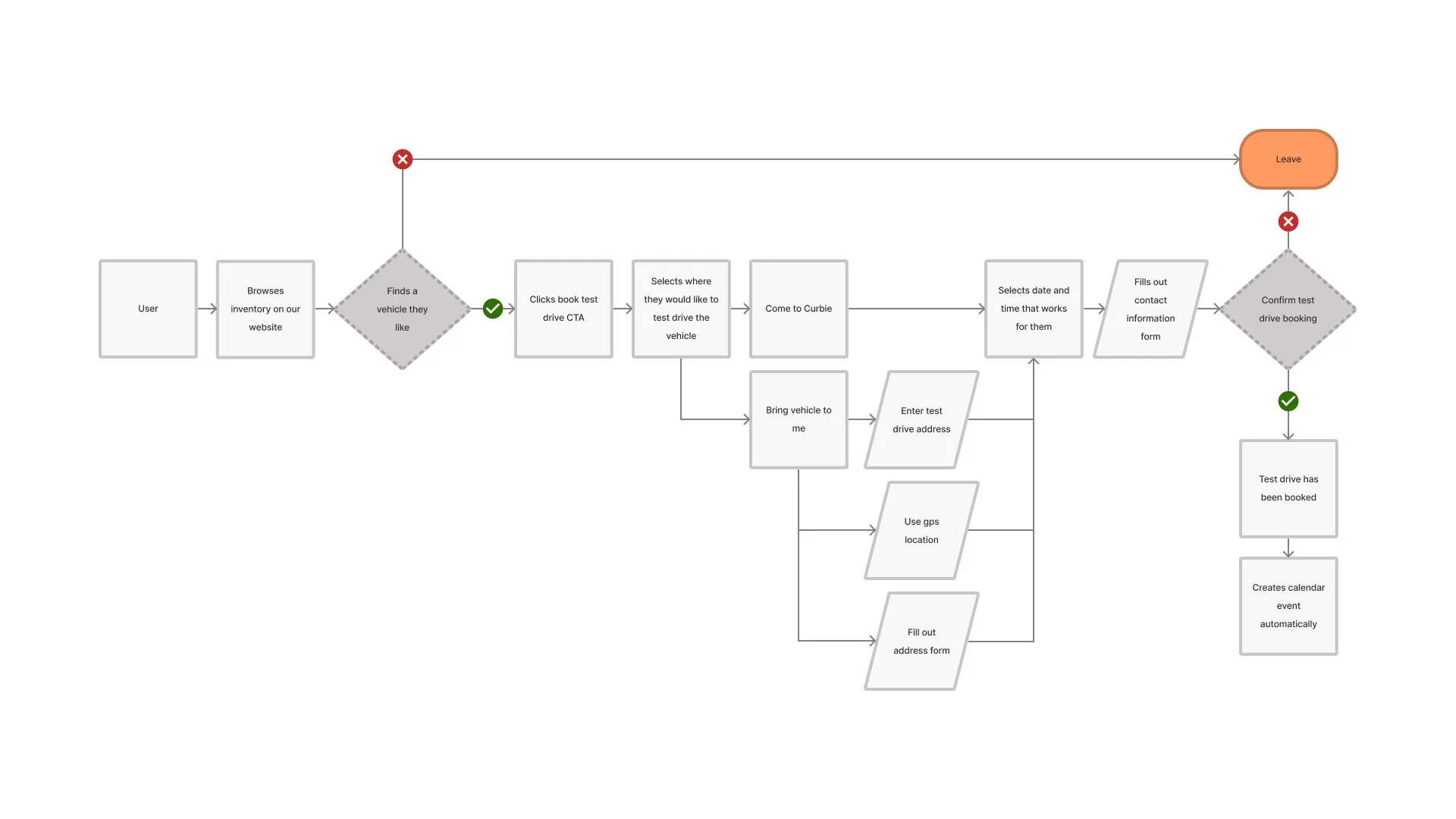
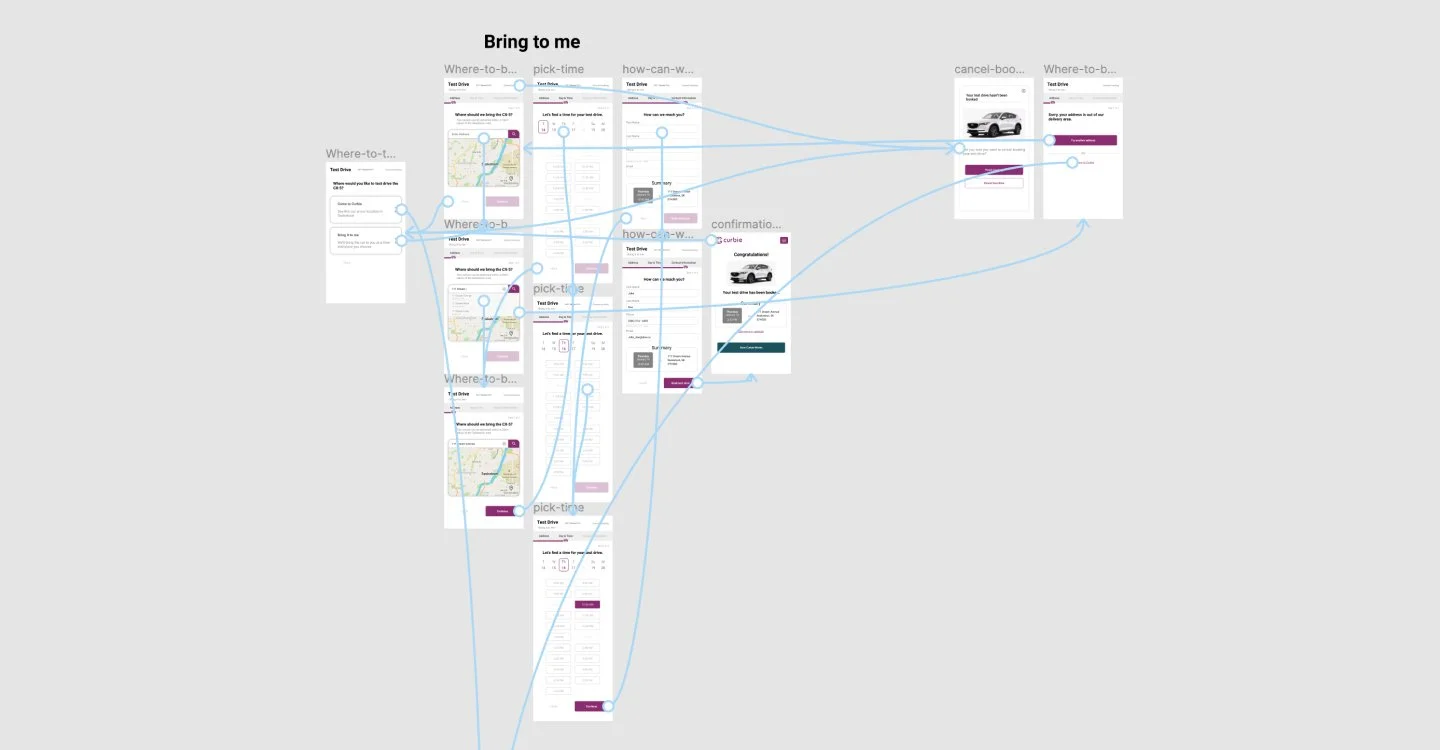
I built a new user flow connecting the customer-facing booking experience to the operational requirements behind it: vehicle selection → test drive option → date & time → location → customer information → confirmation — accounting for different outcomes depending on whether the customer chose in-person or delivery.
Exploring the interaction
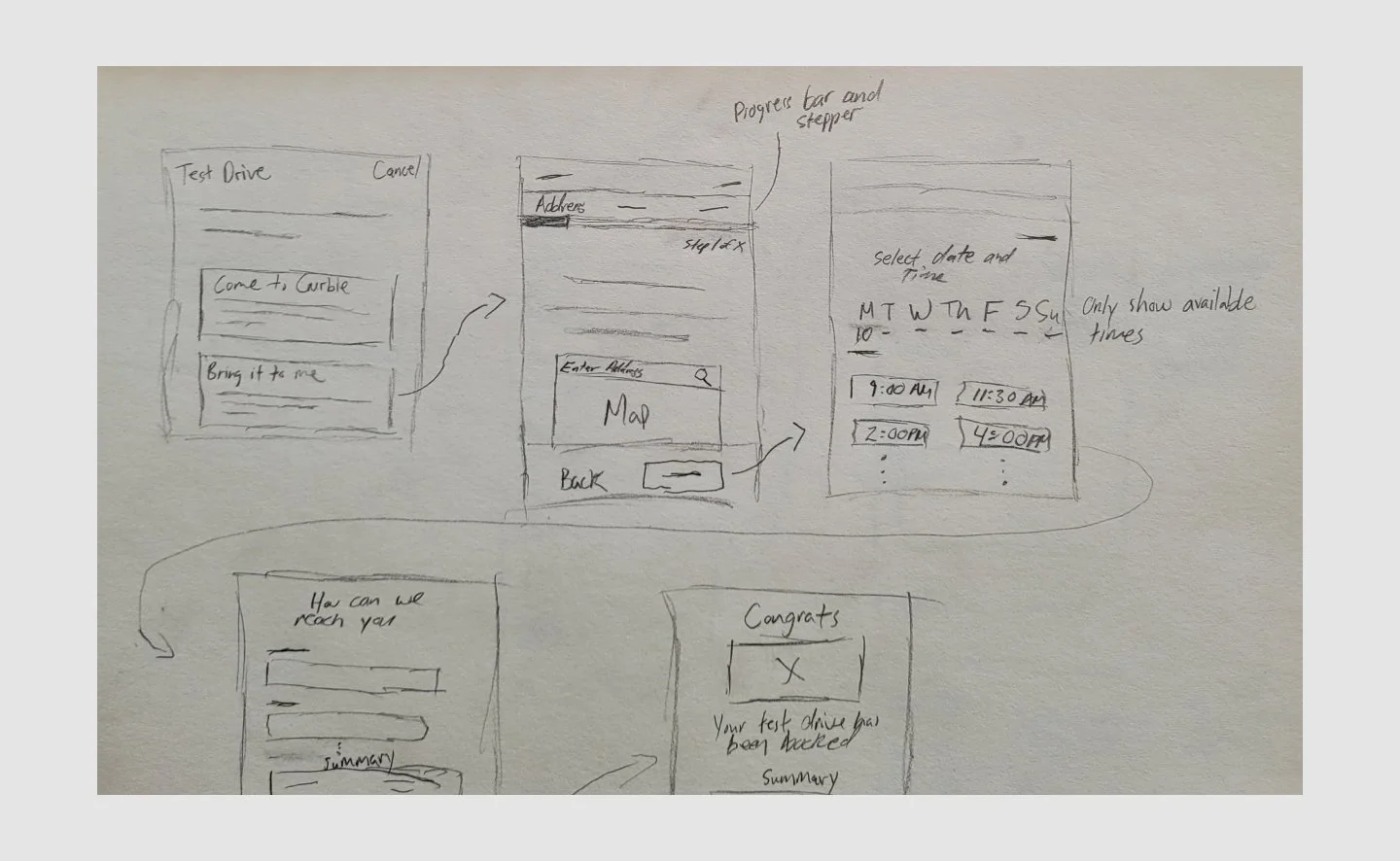
I started by sketching different approaches for presenting the two test drive options — aiming to make the choice clear without feeling like two completely different processes — and shared the concepts with stakeholders early to narrow the direction.
Designing the booking experience
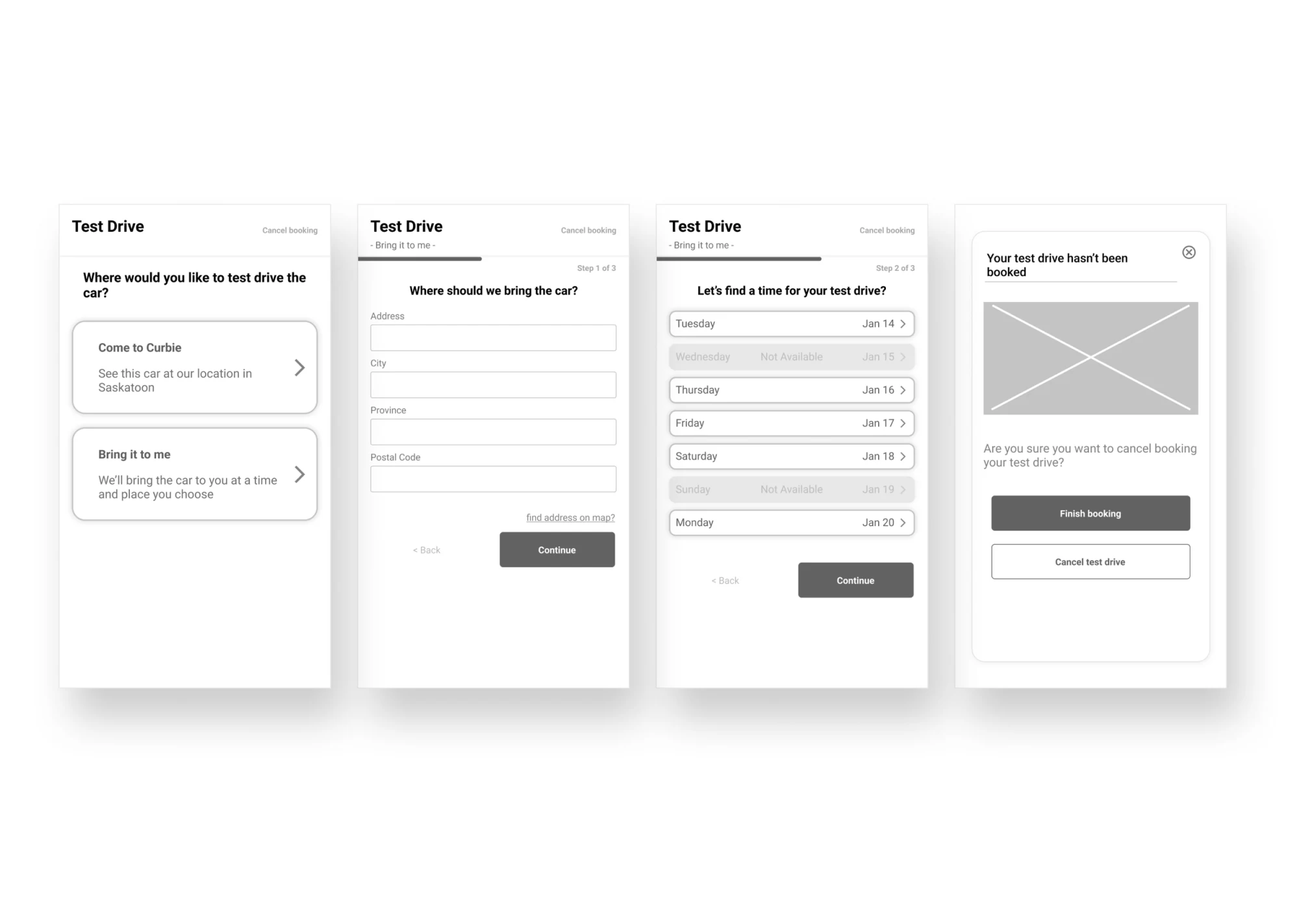
The wireframes brought the journey into a clear, step-by-step experience — one decision at a time. For the delivery option, the flow introduced address selection and map confirmation, letting customers verify where the vehicle should be delivered rather than relying solely on a typed address.
Testing with users
Once the core designs were ready, I built an interactive prototype and tested it with users — checking whether they could discover how to book, understood the two options, could complete the flow, and whether delivery made sense.
Designing for the team
The customer-facing flow was only half the problem — the team also needed a better way to manage appointments. We introduced a dedicated test drive calendar giving a centralized view of which vehicles were scheduled, when, and how many appointments were coming up, reducing the risk of double-booking and making it easier to manage operational capacity.
Building with existing technology
Before development, I explored existing calendar booking APIs rather than building a custom scheduling system — the team decided to purchase and integrate one instead of spending significant development time recreating functionality that already existed.
"Good product design isn't always about designing more. Sometimes it's about knowing what not to build."
Working with Engineering
I provided detailed specs, answered questions, and collaborated on visual implementation, reviewing visual accuracy, interactions, booking states, edge cases, and responsive behavior as it was built — staying involved through release to make sure the implemented experience matched the intended journey.
Results
- Online booking — customers could schedule test drives without calling or emailing.
- A centralized calendar — the team gained a shared view of appointments, reducing conflicts.
- Delivery test drives — customers gained an additional way to experience vehicles.
- Validated experience — 87% completion rate and a 4.4/5 satisfaction score across five participants.
What I learned
- Design the entire service, not just the interface. The booking flow depended on internal scheduling, vehicle availability, and appointment management just as much as the UI.
- Research can uncover opportunities beyond the original problem. Competitive research expanded what the product could offer, not just validated the original idea.
- Don't build what you can buy. Exploring calendar APIs early saved significant development time.
- Internal workflows matter. A great customer-facing experience can still fail if the operational workflow behind it doesn't work.